SPECTRUM PERSONNEL: CLOUDBASE STAFF OFFICERS
|
|||||||||||||||||||||||
|
|
Personal history
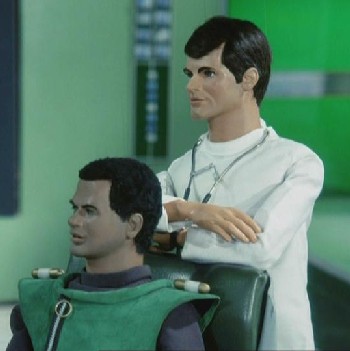
Edward Wilkie was born in Yalumba, Australia, on July 10, 2031. The son of a renowned medical specialist, Edward followed in his father’s footsteps and studied to become a doctor. He gained high standards in biology at school, which provided great help later, when he entered Brisbane University, Queensland, Australia, to follow medical studies at the tender age of 17. The young man graduated with honours degrees in medicine and biology in 2055, and at age 24, entered the World Medical Organisation (WMO), as Assistant Medical Controller for the Australian sector. Although only a short term post, in a small region, it would permit Edward to gain valuable and considerable background experience. It was during this tenure, that Wilkie recognised the need to modernise the techniques used by the Australian medical service, which was still being run on twentieth century concepts. It was when he was promoted to Health Controller for the Scandinavian sector that Edward Wilkie set himself the task to work on this problem, devoting all of his free time to plan a reorganization of the World Medical Organisation. He studied computerised systems and believed that their integration into the medical field would revolutionize applied medicine. Within two years (2057), he had successfully outlined a new system which would revitalize the WMO.
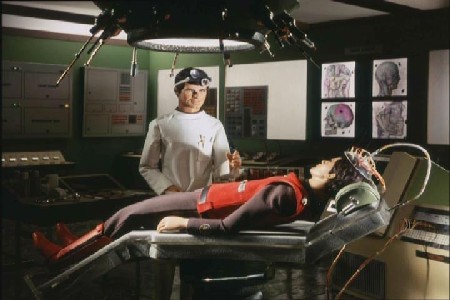
Wilkie was responsible for the design and creation of the so-called ‘robot doctors’: computerized medical beds, programmed with very advanced ‘near free minds’ capable of medical analysis and assessment. They used scanner cameras and numerous other devices to check on a patient’s needs, producing required data in a matter of seconds, and were even able to make their own prognostics and present solutions. A similar design was used to create the ‘auto nurses’, which would be used by the World Aquanaut Security Patrol.
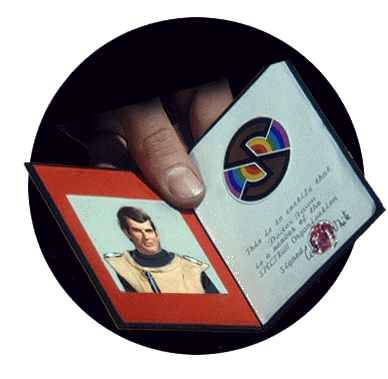
In view of his ground-breaking achievements, the WMO promoted Edward Wilkie to Administrator for the Advancement of Medicine and Medical Science Division, a post he held from 2057 to 2064. This new position permitted Wilkie to receive all the man-power he needed to put his systems and ideas into practice. According to some sources, it was sometime between these dates that Edward Wilkie is said to have married (wife’s name unknown, and date unspecified). Because of his outstanding ability to discover and develop new ways of healing, Edward Wilkie attracted the attention of the selection committee for the new Spectrum organisationl. He was approached in 2065 and offered the job of Supreme Medical Commander of Cloudbase, receiving the colour codename of ‘Doctor Fawn’ and a rank of Captain. |
||||||||||||||||
|
Personality profile
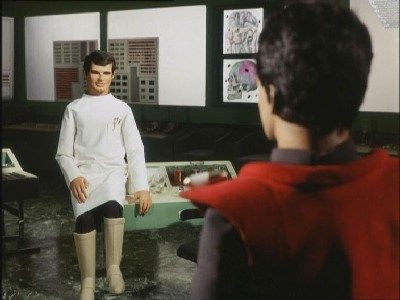
While on duty, Doctor Fawn is totally dedicated to his work and the advancement of research into medical science, a devotion that frequently consumes twenty-four hours of the day. He refuses rest or relaxation until he is satisfied that every eventuality has been checked and taken care of. Even off duty, Fawn’s ‘pastimes’ consist of conducting medical research, and improving his medical robots.
Captain
Scarlet’s unique physiology is for him a continuous source of
curiosity and he spends many hours trying to find the secret behind
his indestructibility and powers to recreate himself. |
||||||||||||||||
|
Fawn: doctor and technical genius
Although it is only hinted at in his official biography, it would seem safe to assume that Edward Wilkie possesses an exceptional knowledge not only in biology and medical science, but also in computer technology. Not only in view of the creation of his ‘robot doctors and ‘auto nurses’ – but also for apparently being the mind behind the creation of, or for having adapted, the computer-aided operating table, in order to help Captain Scarlet in his multiple recoveries. In the TV/Century 21 comic strips, Doctor Fawn also shows that he is more than a simple doctor, when he makes use of his outstanding technical skills in more than one occasions. The abandoned concept behind the original plot for the ‘Captain Scarlet’ pilot for the series, also suggests Fawn’s technical proficiency with computerized systems. Initially, in this plot, the Captain Scarlet replica was supposed to be depicted as a kind of ‘human cyborg’, who had escaped from the control of the Mysterons after his fall from the Car-Vu, and that Spectrum regained control of him through the use of special computers. In the audio-story “Introducing Captain Scarlet”, the latter part of this plotline was re-used, and Doctor Fawn is the one who announces that he is able to return Scarlet to Spectrum’s control. If this story is to be considered as an extension of the TV episodes, it could be theorised, considering how the TV series turned up later, and that Scarlet pretty much seems to have kept his own freewill, that the computers merely were there to help him recover fully from Mysteron control, and this first brush with death. |
||||||||||||||||
|
Other notes of interest
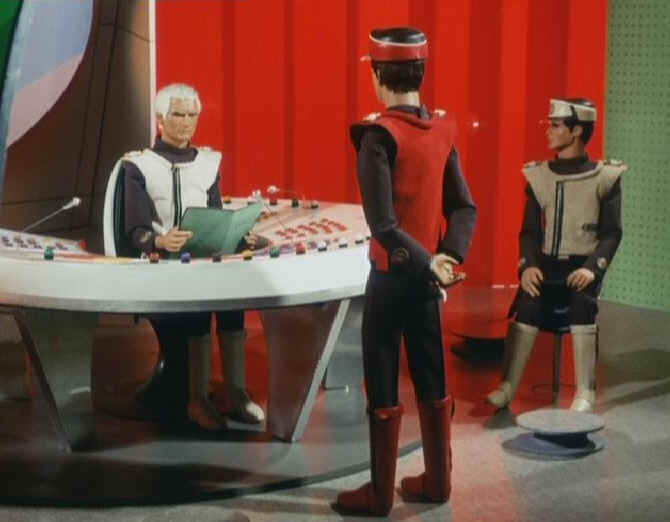
Doctor Fawn was the least used of all the main characters of the 'Captain Scarlet and the Mysterons' TV series. He appeared in only six episodes, and not always with a speaking role. However, the actor providing his voice, Charles Tingwell, had a spoken part in about ten episodes total, giving voices to many supporting characters of the series, including Captain Brown (‘The Mysterons’). Oddly enough, it was Jeremy Wilkin (the voice of Captain Ochre) who performed Fawn’s voice in the audio-adventures 'Introducing Captain Scarlet'. In view of his high-ranking position on Cloudbase and within Spectrum, and his involvement with Captain Scarlet, it is safe to assume that Doctor Fawn is an important character in the series, despite his few appearances, and this is sufficient to warrant his position as a ‘main character’. Officially, Doctor Fawn holds the rank of a colour-coded Captain, but regarding medical matters, he is the highest authority on Cloudbase, even overruling Colonel White, who also must obey his orders in such circumstances. Although one source from his official biography said that Edward Wilkie was married, there is no information regarding what had become of his wife, if they are still together, or had gone their separate ways, especially due to Edward’s new functions when he was recruited by Spectrum (and had to be almost permanently stationed on Cloudbase). It is to be noted that other official documents (such as the biography sheet from the 2001 DVD set) describes Edward Wilkie as single. It is, however unknown, how reliable either information could be. |
||||||||||||||||
|
Fan Fiction Fawn Although Doctor Fawn wasn’t used that much in the TV series, fan fiction writers have recognised his importance, and given him a larger role in their stories. He is seldom the ‘main star’, but he is constantly seen in the background, and in scenes where he has the spotlight, he is invariably making use of his medical or scientific skills (in various stories by Chris Bishop, Marion Woods, Hazel Köhler, Caroline Smith, Mary J. Rudy, to name but a few). Sometimes, he will even be part of the action (‘Twilight of the Gods’, ‘Trouble with Mogwai’, by Chris Bishop). Fawn seldom leaves the confines of Cloudbase, but he is shown on a ground mission in ‘The Seeking of XTC 80’, by Linda Chapple, from the Captain Scarlet’s fanzine ‘Spectrum is Scarlet’, and also in a handful of other online stories, where he takes central stage. ‘To Taste and Taste Not’, by Caroline Smith, and ‘The Best Day Ever’, by Keryn, are two examples. In the fanfic, ‘The Last Captain Scarlet Story’, by John Mariani, Fawn is the hero of the hour when he uses his skills to prevent a ‘hypermysteronized’ Scarlet construct from destroying Spectrum, thus bringing the War of Nerves to an end.
There is not much added to the Fawn’s background in fan fiction, and little is revealed about his past. In ‘To Taste and Taste Not’, Caroline Smith makes him the son and grandson of winery owners in the Barossa Valley, in South Australia, named his parents Elizabeth and Joseph, and we are introduced to a long-lost love, Madelyne Hayes. In ‘Shades of Fawn’, by Nigel Preece, Edward Wilkie is said to be the doctor who helped Sam Shore (the character from the TV series ‘Stingray’) regain some of his mobility, but who couldn’t save the use of his legs. In the short ‘G’Day’, from the ‘I’ll be Home for Christmas’ series of stories, Tiger Jackson presents us with his wife, Tathra, who was also ‘Doctor Rose’, chief medical officer of Spectrum Sidney. In most stories, Doctor Fawn is shown as the dedicated character described in his official biography. He is supporting of his patients, and compassionate, and will go to any lengths to help them. Some writers had added a grumpy aspect to his personality (what could be termed the ‘Leonard McCoy’ effect), such as Chris Bishop and Marion Woods (‘Rock-a-Bye Angel’). Although he is a fervent user of computerized devices in helping with his job, in most stories, he shows an evident aversion for the over-use of the ‘Room of Sleep’ (as in ‘Twilight of the Gods’). Doctor Fawn is also described as a seemingly good friend of Colonel White, with whom he would often share professional and personal confidences (‘That Is What Friends Are For’, by Marion Woods, ‘Spectrum is White’, by Chris Bishop, amongst other stories). |
||||||||||||||||
|
The voice behind Fawn…
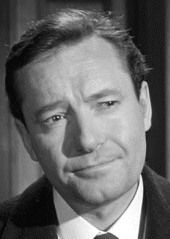
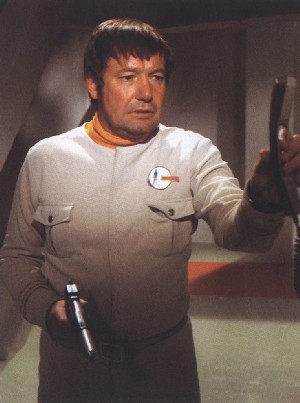
Doctor Fawn’s voice was performed by the multi-talented Charles ‘Bud’ Tingwell, an Australian actor born in Sydney. Tingwell also provided the voice of Captain Brown, in the first and second episodes of the series, and gave voice for a number of supporting characters. Before ‘Captain Scarlet and the Mysterons’, he had recorded character voices for the later episodes of ‘Thunderbirds’ and also in the feature film ‘Thunderbirds are Go’. He later starred in ‘Catweazle’ and the ‘Mindbender’ episode of ‘UFO’.
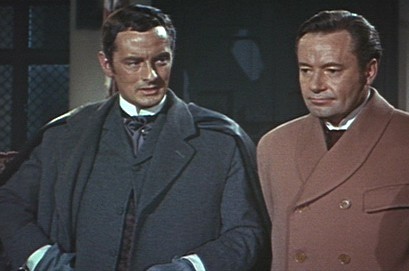
A character actor, Charles Tingwell had many roles outside of Century 21 Productions. His most noticeable was that of Inspector Craddock in the Margaret Rutherford’s ‘Miss Marple’ movies, where he would almost invariably end up being knocked over the head… including in ‘Murder Ahoy’, in 1964, in which actor Francis Matthews (Captain Scarlet’s voice actor), played a secondary part. The two of them would meet again, two years later in 1966, playing two brothers, for the Hammer movie ‘Dracula, Prince of Darkness’, in which Matthews would play the main hero facing Christopher Lee. Charles Tingwell died in a Melbourne hospital on May 15, 2009, at 86, after a battle with prostate cancer. He had a script by his side and was still learning his lines for his latest role. He was one of Australia’s legendary actors, having appeared in over a hundred movies, and with a host of appearances on television and theatre. |
||||||||||||||||
|
The faces of Doctor Fawn
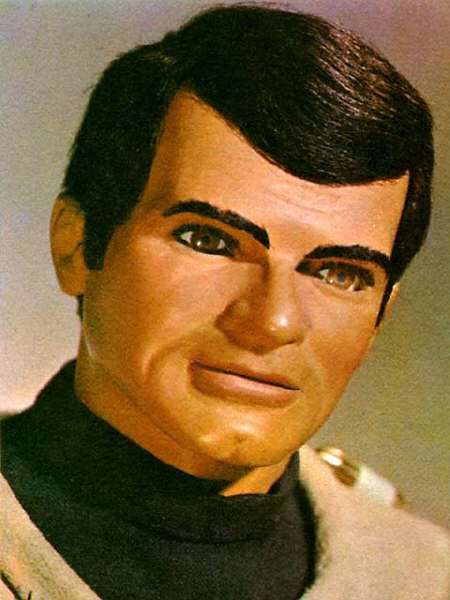
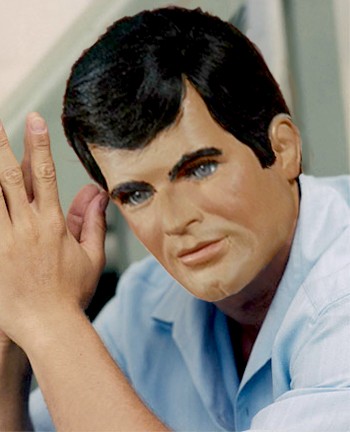
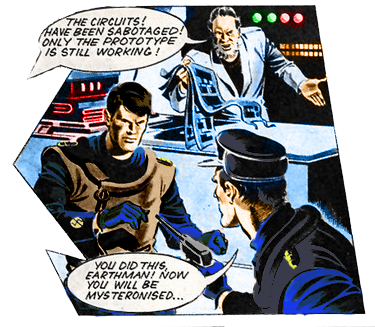
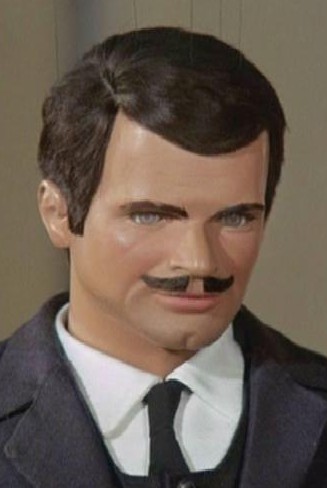
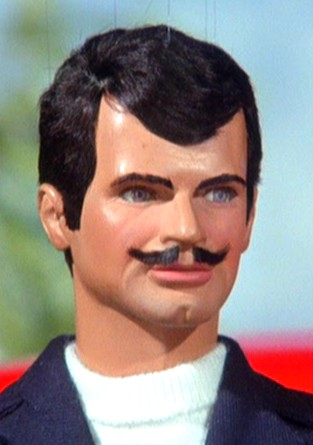
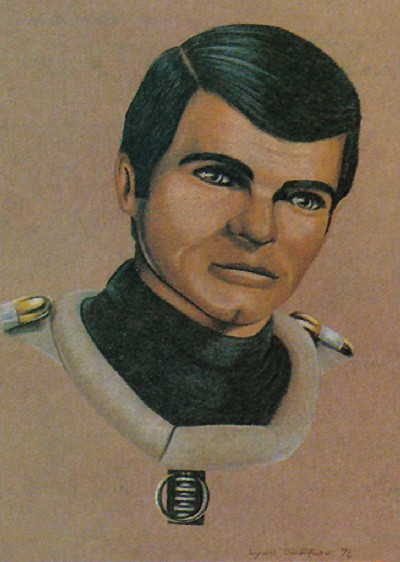
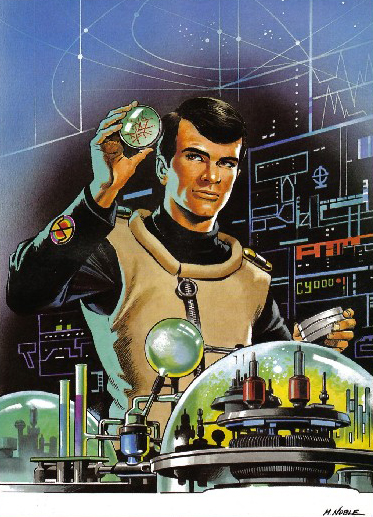
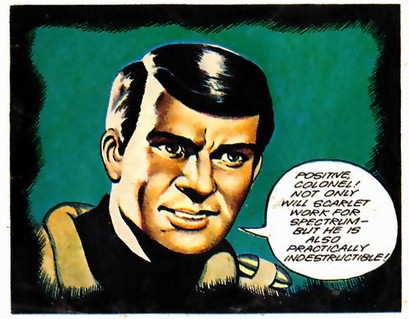
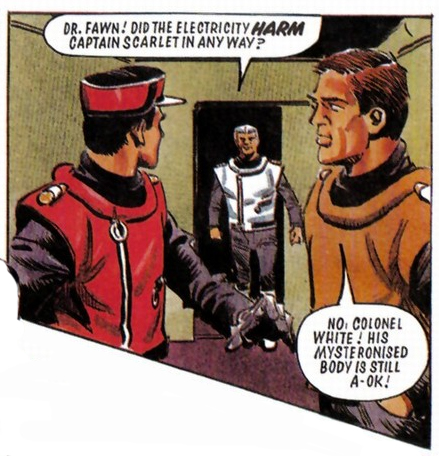
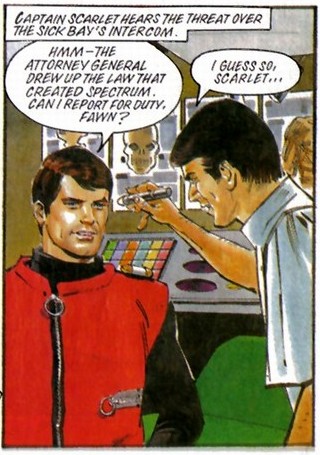
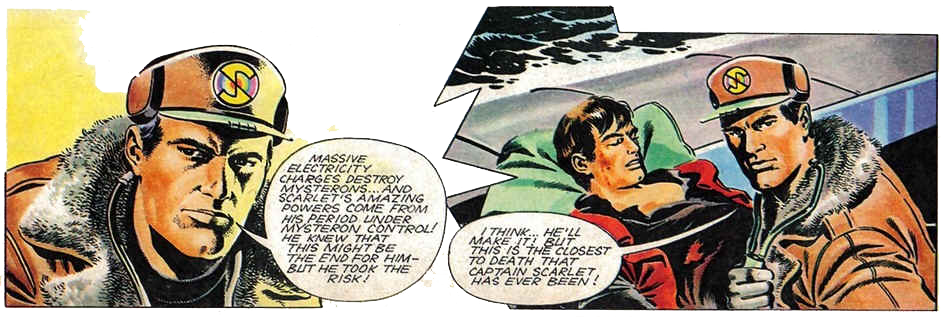
After ‘Captain Scarlet and the Mysterons’, Doctor Fawn, like most of the other puppets, was re-used in later Supermarionation shows. He became Fearless Foley in Joe 90’s episode ‘Attack of the Tiger’ and made two appearances as British Intelligence agent Saunders in Secret Service, in the episodes ‘A Case for the Bishop’, and ‘To Catch a Spy’. In the ‘Captain Scarlet’ comic strips, the character of Doctor Fawn endured relatively the same fate as in the TV series, as he was very seldom used, although there had been some stories in which he was prominent enough, such as in the storyline entitled ‘Blue for Firing Squad’, mentioned above, where he still demonstrates his technical skills by helping in the creation of a force-field belt for Spectrum’s benefits, and is kidnapped by Captain Black, and in ‘De-Mysteronised’, where he tries to free Black from the influence of the Mysterons, and ends up being knocked unconscious by the same man he wants to help. The two stories were drawn by Mike Noble. Fawn did appear in other strips, sporadically, drawn by such artists as Ron Embleton, Barry Mitchell and Mike White. For the ‘Captain Scarlet and the Mysterons’ magazine, published between 1993 and 1994 by Fleetway, Lynn Simpson drew a nice portrait of Doctor Fawn for her Spectrum gallery collection. However, it must be said that probably the most beautiful artistic rendition of Doctor Fawn is a poster that Mike Noble drew outside of the comic strips series, entitled, 'Mastering the Mysterons' showing the good doctor, busily working in the medical lab. |
||||||||||||||||
|
|
CGI series: Fawn’s noticeable absence
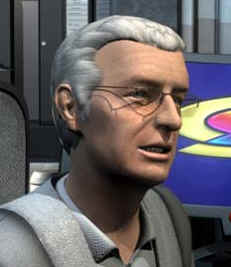
Contrary to the other characters from the original ‘Captain Scarlet and the Mysterons’ series, the name of ‘Doctor Fawn’ was not revamped and included, under a new identity or otherwise, in the ‘New Captain Scarlet’ CGI series, which was launched in 2005. The rank occupied by Fawn was taken over by a totally new character, Doctor Gold, an Austrian-American named Mason Frost, who specialized in astro-medicine and psychology.
Many fans of the original series bemoaned the absence
of Doctor Fawn from the new series – at least in the beginning.
But Doctor Gold, despite his ‘bedside manner’ which left a lot
to be desired, was an interesting character and eventually gained
recognition amongst the new CGI series’ audience.
It could be considered that, because of this total
replacement of the character, Doctor Gold has worked better than
some of the other characters in the original series, who may have
had the same code-names, but ended up with completely different
identities. There is no confusion at all between Doctor Gold and
Doctor Fawn: each of them is a character in his own right. | ||||||||||||||
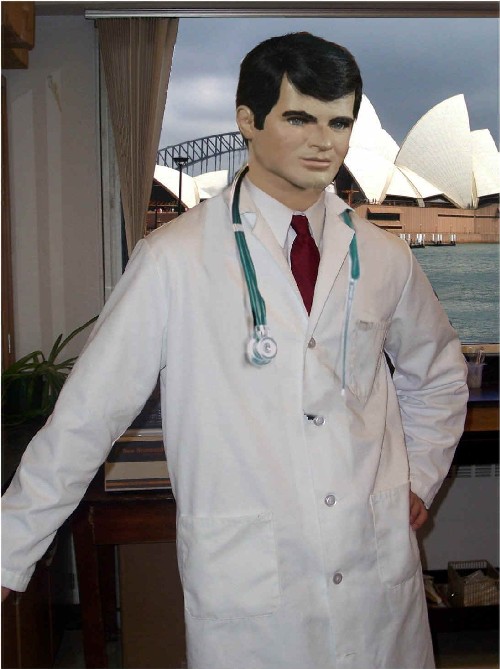
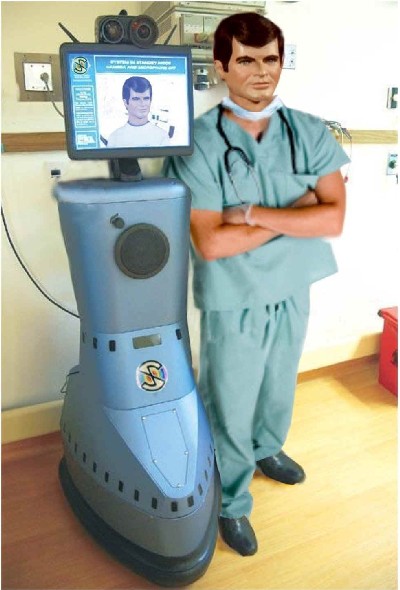
(Sources: TV Century 21 material (Annuals, books and magazines), Engale Marketing's Century 21 magazine, Issue 15, Winter 1995, Fleetway Magazines, Captain Scarlet & the Mysterons book by Chris Drake & Graham Bassett, Complete Book of Captain Scarlet by Chris Bentley… all related to TV Century 21 material - Photo-montages provided by dedicated fans.)
CAPTAIN SCARLET - CAPTAIN BLUE - COLONEL WHITE - CAPTAIN BLACK - LIEUTENANT GREEN
CAPTAIN OCHRE - CAPTAIN MAGENTA - CAPTAIN GREY - DOCTOR FAWN
DESTINY - SYMPHONY - MELODY - RHAPSODY - HARMONY
CAPTAIN BROWN - CAPTAIN INDIGO - WORLD PRESIDENT T.J. YOUNGER
REGULAR CAST APPEARANCES - REVAMP CAST APPEARANCES - JAPANESE NAMES
You can send your comments to:
| Copyright © of all trademarked material ('Captain Scarlet and the Mysterons', and all other series titles, all their characters, vehicles, crafts, etc., Supermarionation, Century 21, CITV, and als) owned by ITV Global Entertainment/Entertainment Group Limited, a division of ITV plc. Information found on this fan site are taken from copyrighted © material (books magazines, DVDs, TV medias, comics etc.) property of their rightful owners, official organisations and/or artists depending of ownership rights (ITC/Polygram/Carlton/Anderson Ltd/GAP plc and others). This site is meant as a fan site, with respect and tribute to the work of the artists involved. No profit is made from the use of those copyrighted materials. |